Lucas
San Martin Flores.
I build machine learning models and analytical tools to identify emerging threats, uncover patterns, and strengthen Trust & Safety investigations.
My experience at TikTok and in threat intelligence informs how I approach complex risks, analyze evidence, and develop practical solutions for investigators.
Investigator’s instinct.Builder’s craft.
Most of my work starts with the same problem: too much information, not enough signal. I combine investigation, machine learning and data analysis to turn complex information into actionable decisions.
At TikTok, I worked across Trust & Safety investigations, risk containment, proactive enforcement and high-severity escalations, including global crises. My work spanned fraud and scams, misinformation, minor safety, self-harm, hate speech and hateful ideologies, and nudity and sexual activity. I connected signals across policies, regions, languages and datasets, and built end-to-end supervised-learning pipelines to make investigative workflows faster and more scalable.
Before TikTok, I worked as an intelligence analyst, using OSINT and multilingual research to produce risk assessments, examining actors, narratives and behaviors in context. That experience shapes the software I build today: start with the investigative question, find the signal, and automate repetitive work while preserving the context needed for sound decisions.
More about my backgroundThe research behind the tools.
As a Trust & Safety Researcher, I kept encountering the same barriers during TikTok escalations and global crises: repetitive review, fragmented evidence, and subtle patterns buried in vast multilingual datasets. These challenges made it harder to identify violative content and respond efficiently.
I researched those recurring problems and the tools available to address them, conceptualized better investigative workflows built for investigations spanning thousands to hundreds of thousands of pieces of content, and developed the independent apps below over time.

Fragmented evidence
Large volumes. Scattered context.
Surface the signal
Patterns that deserve a closer look.
Review with context
Evidence ready for investigation.
- Observe
Spot the barriers
Identify repetitive tasks, fragmented evidence, and patterns that slow investigations.
- Research
Study the gaps
Explore classification, phrase discovery, translation, and video search as investigative methods.
- Conceptualize
Shape the workflow
Surface patterns, preserve source context, and help investigators prioritize evidence for review.
- Develop
Build useful tools
Develop tools for classification, language analysis, multilingual review, and searchable video evidence.
App Portfolio.
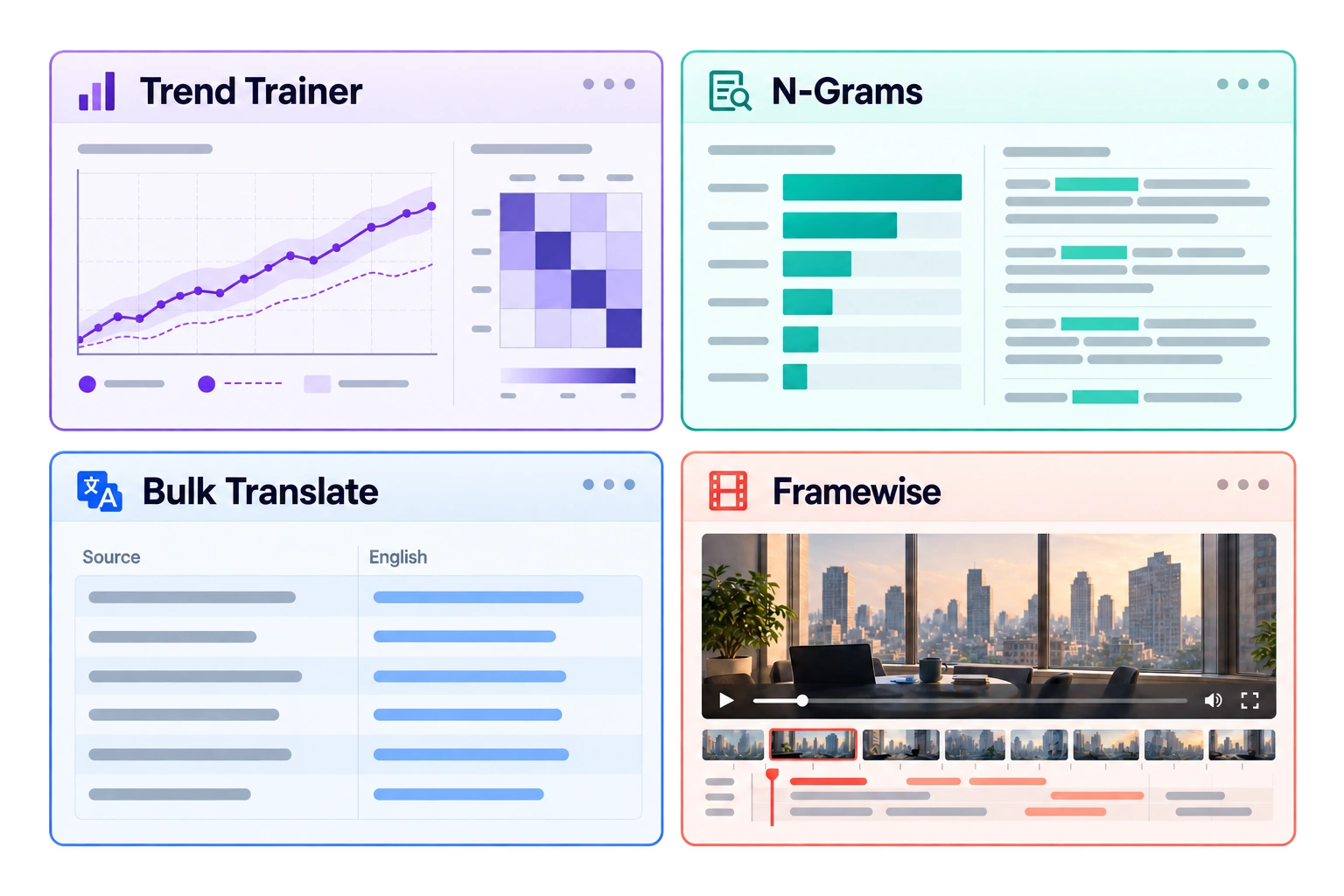
Below are the independent apps I’ve developed for Trust & Safety investigations. Each project explains what the app does, how it works, and how I built it.
Impact at TikTok
High-risk enforcement escalations led.
Pieces of violative content removed with contributions from my work.
Less escalation time, supported by the automation frameworks I developed at TikTok.
Trend Trainer
Train your own classifier. Automatically classify new content.
Define the trend you’re investigating, train on representative labeled examples, then run batch inference on new comments or extracted video text to prioritize review.
Explore case study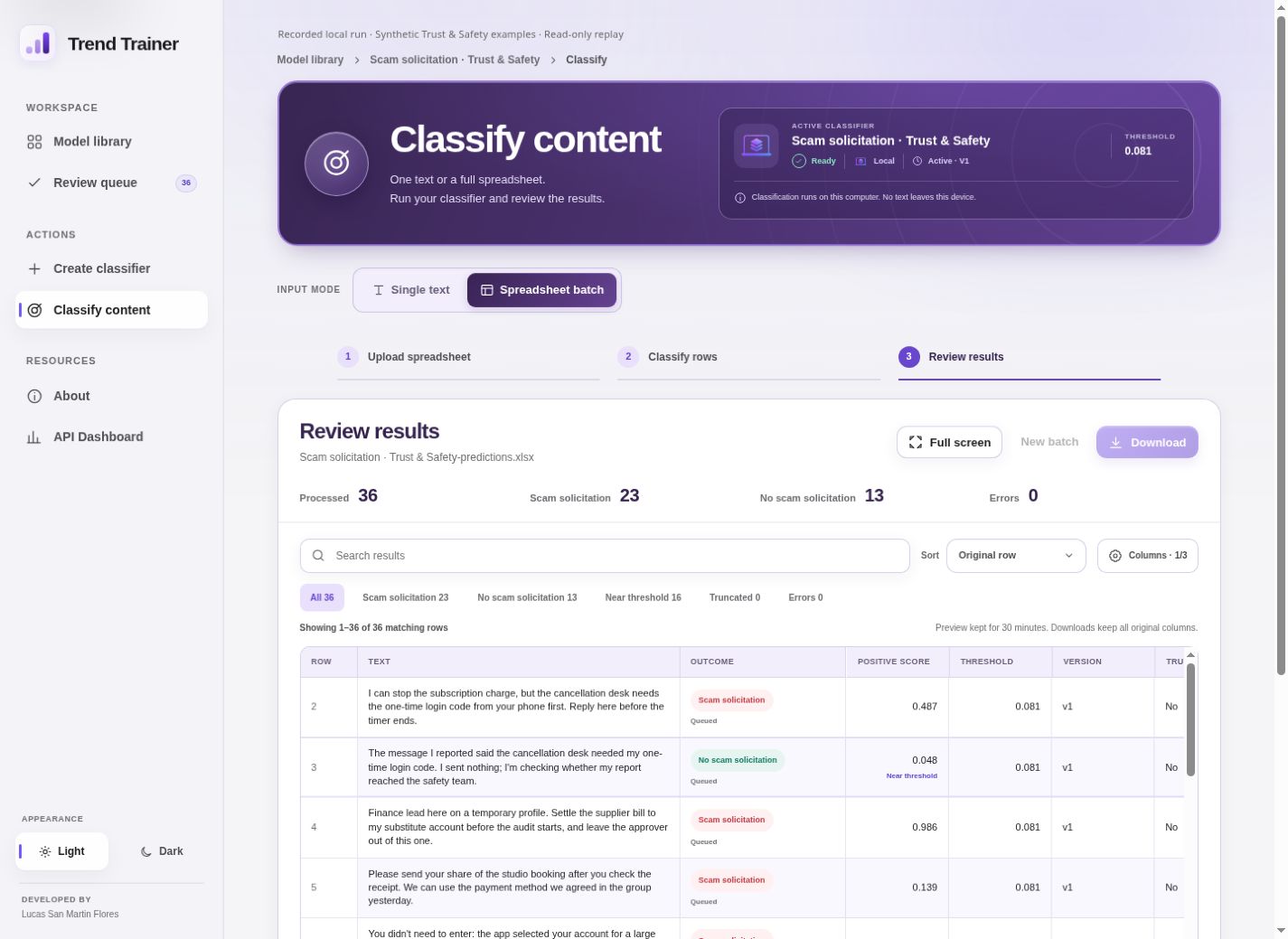
N-Grams
Find recurring language that opens up an investigation.
Surface repeated strings and phrases across large text collections, from comments to video transcripts. Check the source context, then use the wording to expand your search.
Explore case study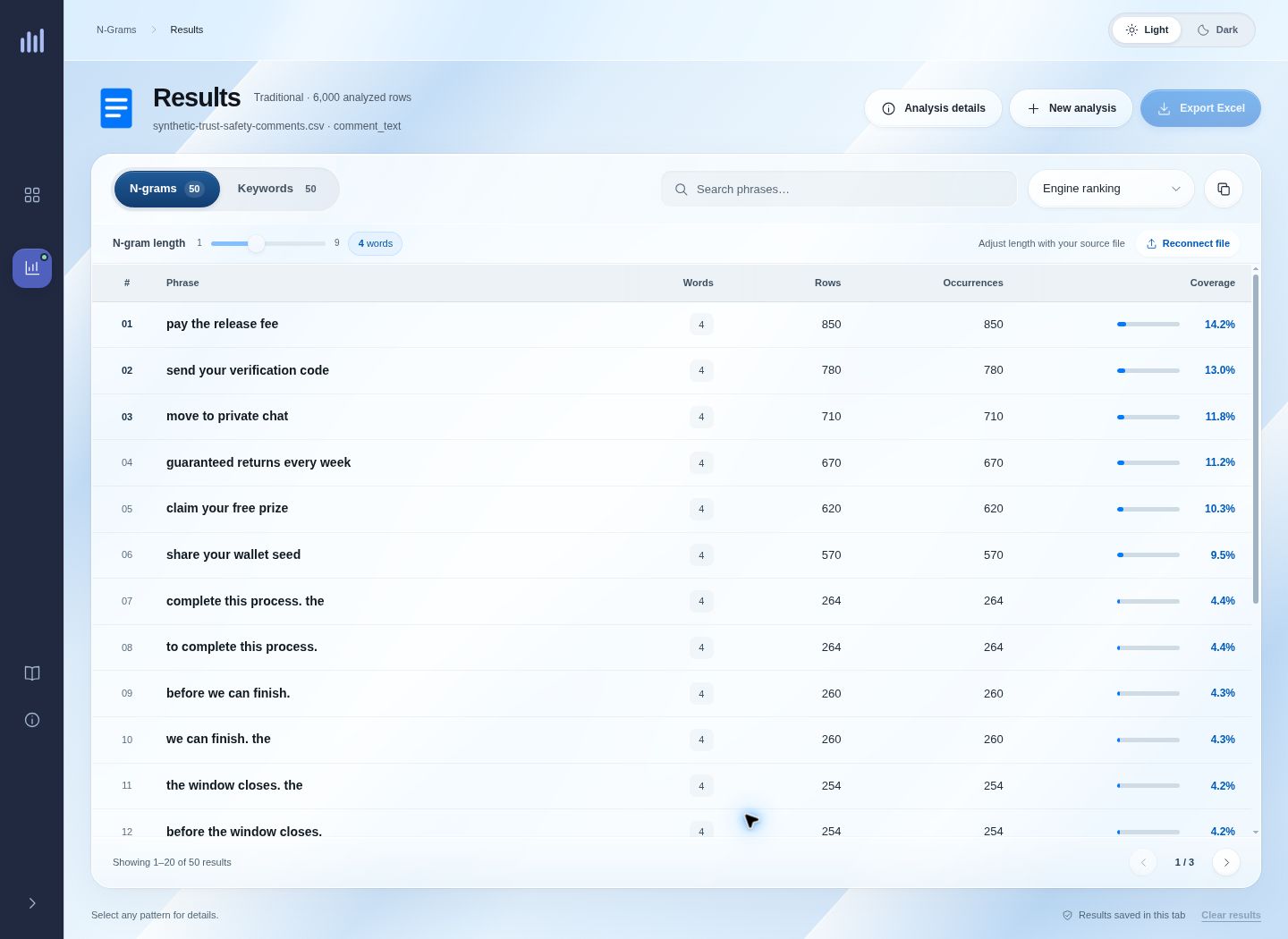
Bulk Translate
Bring multilingual evidence into one shared language.
Batch-translate comments, reports and extracted video text into English so investigators can compare leads across languages, with original text and identifiers alongside the translations.
Explore case study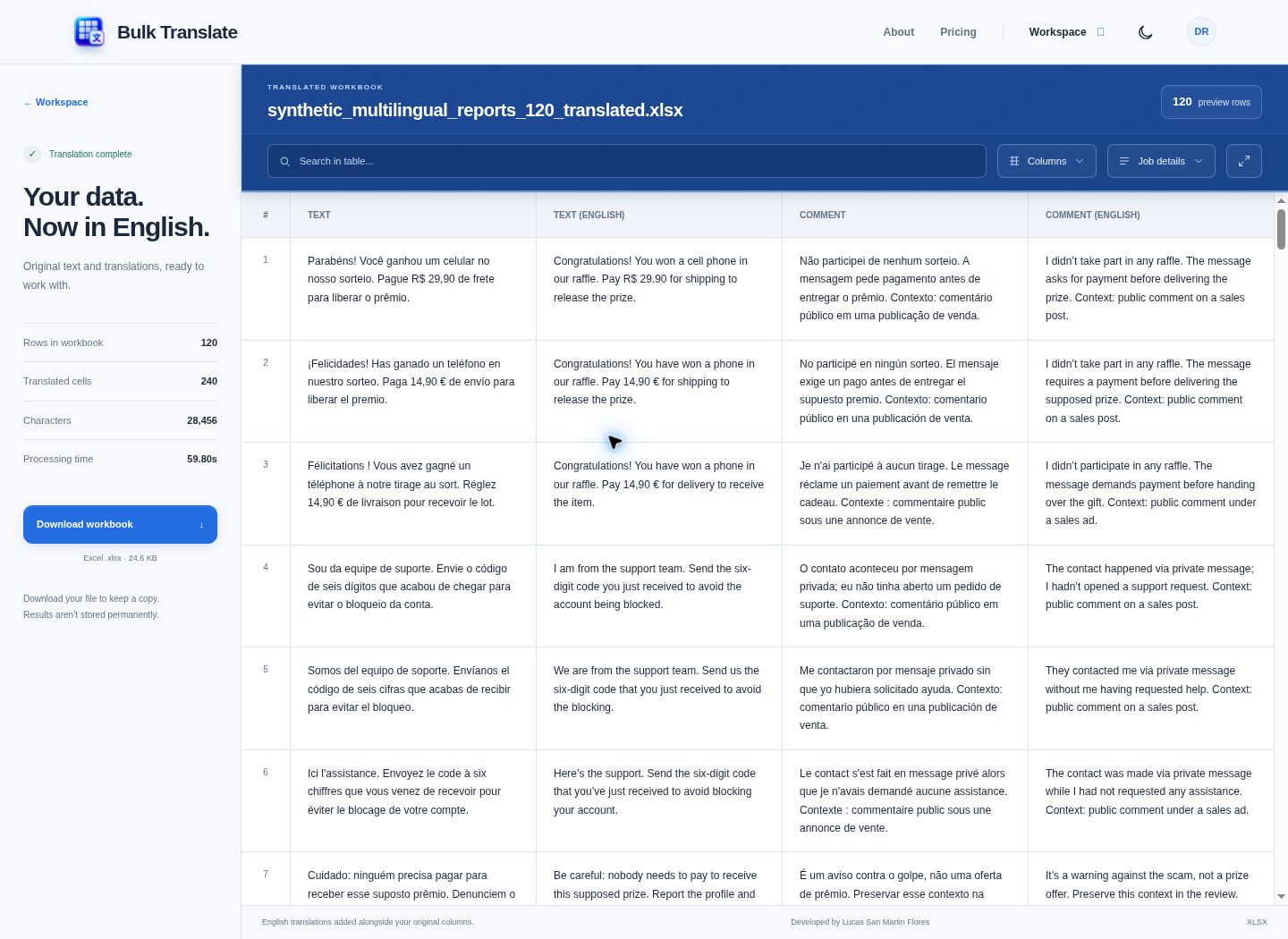
Framewise
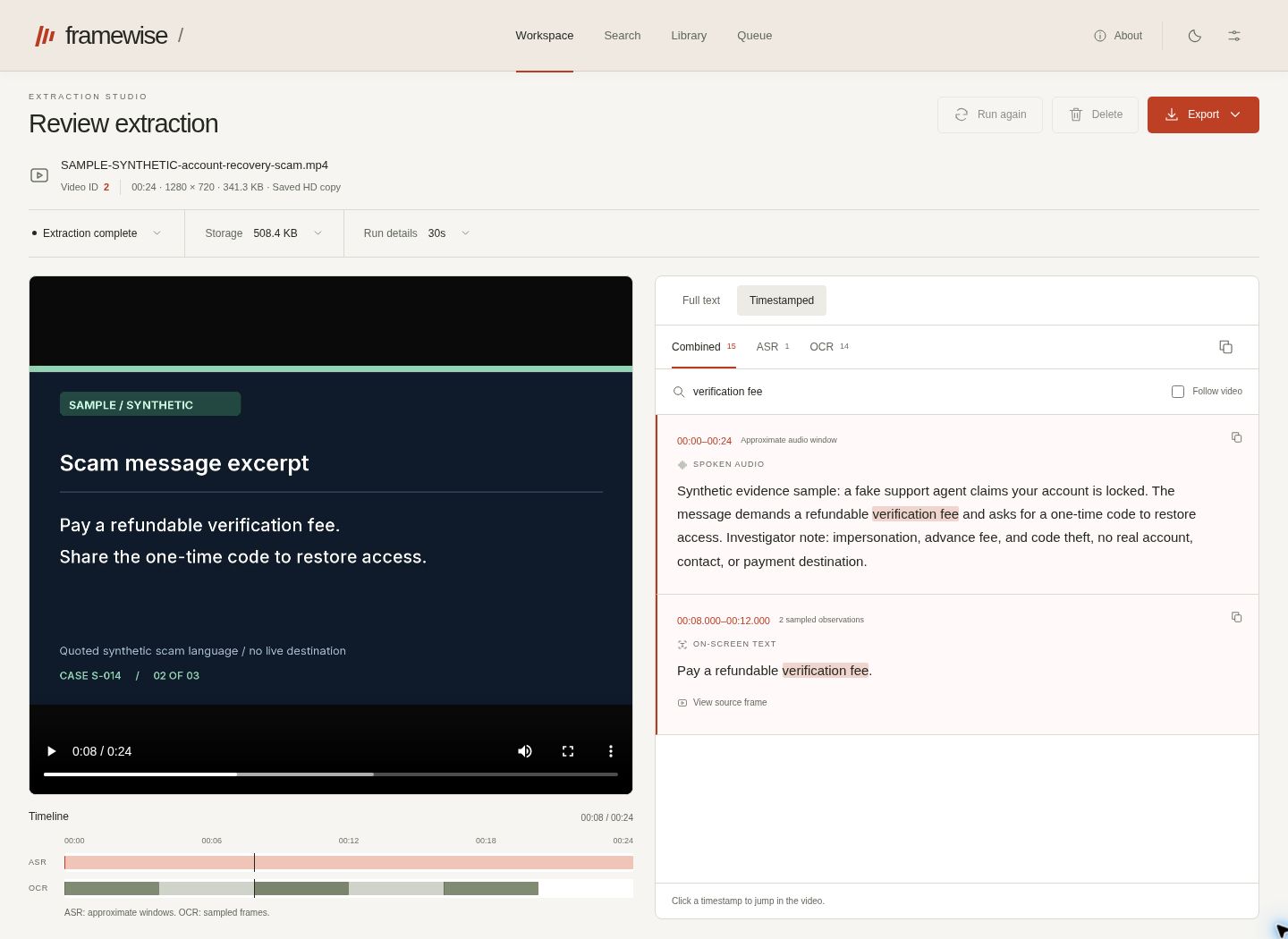
Batch-extract speech and on-screen text into a searchable video catalog.
Search across a collection for words spoken or shown on screen, then open the matching video at its speech window or sampled frame.
Explore case study